Finding the Highest and Best Use for Capital: An Interview with CFO Rachel Bellamy
Published on
June 9, 2026
Author

Jennifer Huang
Marketing Program Coordinator
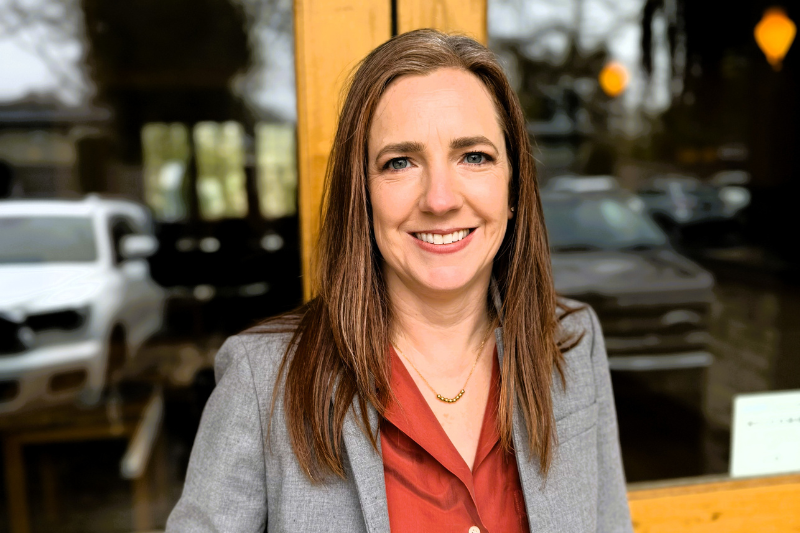
Over the course of Rachel Bellamy’s career in accounting and finance, two things have remained constant: her love of accounting and her passion for nonprofit work. Three weeks into her new role as Chief Financial Officer, Rachel and I sat down for a conversation spanning leadership, identity, and professional development. Read on to learn about Rachel’s career shift to freelancing, how she views accountability in leadership, and more.
When did you first identify as a leader? What went into that?
I first identified as a leader when I joined Mercy Corps as a controller and inherited a small team. On my first day, I scheduled a team meeting, so that I could get to know everyone—but mostly, I received one-word answers.
Later in that meeting, I learned that this was the first time they had all met as a team and they weren’t used to talking in front of each other. Immediately, I knew that the team needed more leadership and more time together. We started to have weekly team meetings to create a space to build relationships with each other.
This experience was really my first as a leader. After working with them for eight years, they became a very strong team. This showed me that leadership is really about helping people connect, grow, and succeed together.
What do you think are some of the most important qualities of an effective leader?
I think it's important for leaders to be good listeners. To not just be silent, but to actively listen and learn from others.
Another quality is accountability. A leader of a team is accountable for the effectiveness of the team, as a whole. If the team is not effective or cannot complete tasks because they lack resources, then the leader is responsible for figuring out what their team needs. Being accountable as a leader means understanding what your team needs so you can all work towards accomplishing goals that fulfill the mission.
Lastly, effective leaders stay positive about the direction of the organization. Of course, you can acknowledge challenges and opportunities, but you can do so in a positive light or in a negative light. There are a lot more opportunities when you can see things in a more positive light.
Was there a moment in your career that changed your perspective on your field or your career trajectory?
I actually recently had this moment in my career. After leaving PAE Consulting Engineers, I took some time off to think about what I wanted to do next and decided to try working for myself as an independent contractor. I was excited by the idea of creating my own thing, directing my own work, and choosing the people I worked with, so I created an LLC.
As I was getting into the work, I realized that I missed being part of a team – the collaboration, shared sense of purpose, and being part of a larger organization with a mission and focus. I understood why I wanted to work for myself, and at the same time, I realized it wasn’t right for me. When the opportunity at Craft3 came up, it felt like the right fit. I saw an organization doing great work with a clear mission. I also liked that Craft3 combines financial services with nonprofit work in a meaningful way.
How is the (work) you of today different from the you of 20 years ago?
How I balance work and my personal life has changed a lot over the years. 20 years ago, I was all about work all the time. And I didn't have different personas. I just had the one me, and it was work. Now, I have “work me,” where I really enjoy what I do. And I also have my personal life and my kids. I prioritize my time with them, and I take time off. I have good boundaries for myself in terms of when I start and stop work and what I do on the weekends.
What do you see as the power of financial analysis and tools for a mission-driven organization like Craft3?
For mission-driven organizations, the people are a huge part of making an impact and driving the organization. But the money has to be there for it to work.
Understanding where that money is coming from, where it could come from, and what you can do to best utilize it is really important for mission-driven organizations, who want their capital to go to the highest and best use. Using capital more effectively helps an organization focus on the mission and push it forward.
For Craft3, this means deploying capital to small businesses or communities that need it the most and that are going to be able to use it to make the biggest impact in their communities. As a community development financial institution (CDFI), before making a loan, we need to understand what we can do with our capital, what capital we have, and evaluate the risk of the deal. None of this is possible without financial analysis.
What excites you about being at Craft3?
The people at Craf3, and the heart that they have for the mission. Staff are focused on doing their jobs well, and that is exciting to me. There’s also an openness to change, doing things in a way that is best for the organization and for helping us achieve our mission. I love process improvement, and so I feel energized by the culture.
About Rachel Bellamy
With more than 20 years of experience, Rachel brings a passion for finance along with her love of mission-driven work to her role as Craft3’s CFO. Her experiences range from auditing to executive leadership at organizations like Deloitte and Touche, Russell Investments, and Mercy Corps. Before joining Craft3, she was the CFO at PAE Consulting Engineers.
Rachel grew up in Southern Oregon and believes deeply in empowering communities and expanding access to resources. Based in Lake Oswego, she is actively engaged in her community. She serves on the Board of Directors for Rose Haven and Lake Oswego Sustainability Network. Learn more about Rachel.